Learning Guides · Study Tools · Language apps
Both apps can teach you real words and phrases. They differ in what they ask of you:
- Duolingo if you want to start free, practise a few minutes a day and keep a streak going. Its free plan is a full course, with ads and limits on mistakes.
- Babbel if you want lessons built around everyday conversations, with grammar explained in plain words, and you are ready to pay for a subscription.
- Neither alone if your goal is to hold a real conversation. The research on both apps says the same thing: add time with real people.
About the links: this guide compares each company’s published plans and research, checked in October 2026. It is not a months-long test of both paid plans. The links below are ordinary links; if we join a partner program later, paid links will be labelled. Our disclosure.
At a glance
| Duolingo | Babbel | |
|---|---|---|
| Free to use? | Yes. The full course is free, with ads and a limit on mistakes | Free sign-up and the first lesson of every course; the rest needs a subscription |
| Languages | 100+ courses (all language pairs counted) | 14 languages, all included in every plan |
| Lesson style | Short game-like exercises, streaks, leagues and points | Short lessons built around dialogues, with grammar tips |
| Paid plans | Super (no ads, unlimited mistakes) and Max (adds AI conversation features) | Monthly, yearly or one-time Lifetime |
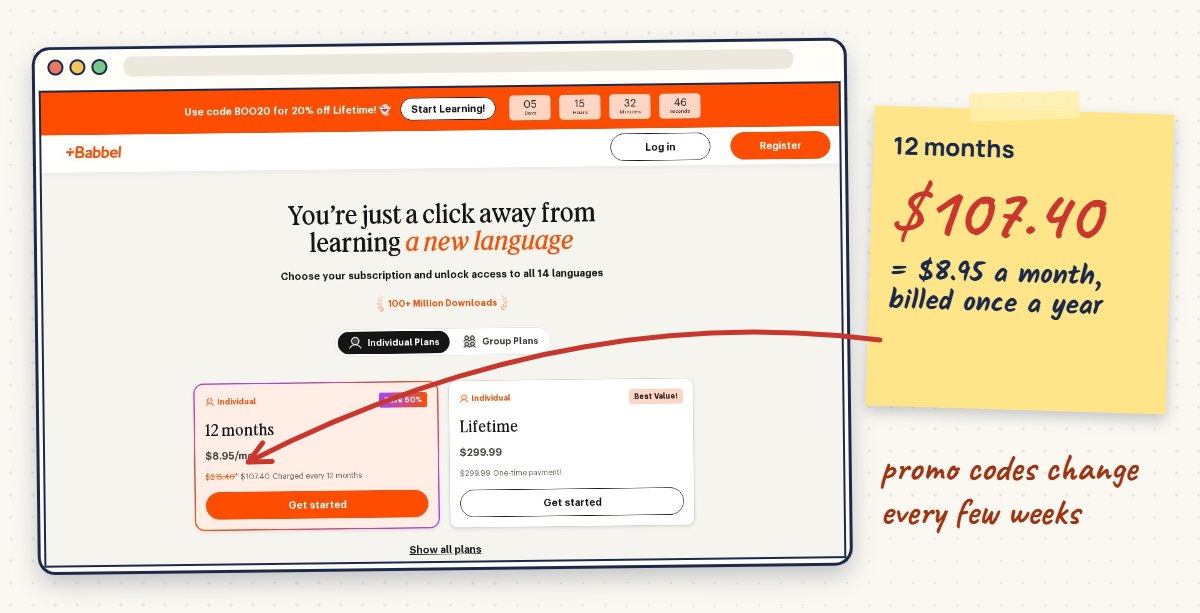
| Price you will see | Shown in the app; varies by country and app store. 1-week free trial for Super | 12 months: $107.40 ($8.95/month). Lifetime: $299.99. Frequent promo codes |
| Best for | Building a daily habit on a zero budget | Learners who want structure and explanations |
Sources: Babbel prices page, Super Duolingo page, both checked October 25, 2026. Babbel’s prices were shown in US dollars; promotions change week to week, so confirm before you pay.
What a year really costs
A yearly plan sounds cheap per month. The number that matters is what you pay for each hour you actually practise. If you pay for a year and stop in March, your “per month” price triples.
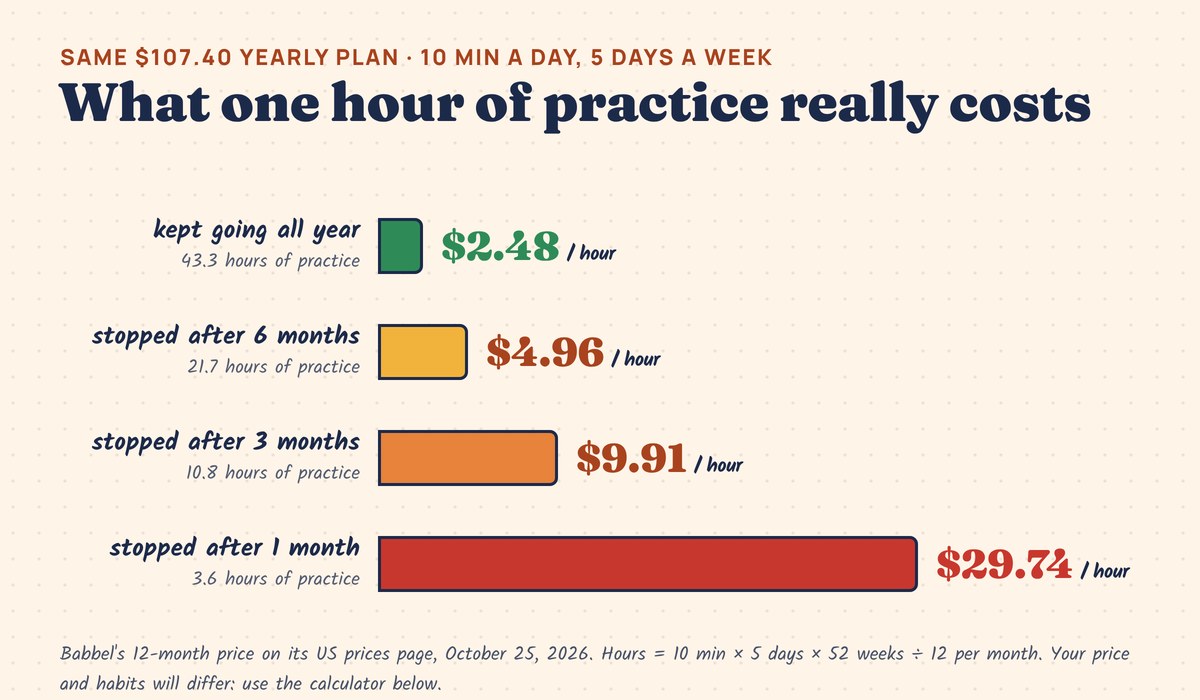
Cost-per-hour check 1-minute tool
Type the price you see in the app or on the website. Nothing is saved or sent.
Prefilled with Babbel’s 12-month price from October 2026. For Duolingo Super, enter the yearly price your app shows.
01 Duolingo Free to start
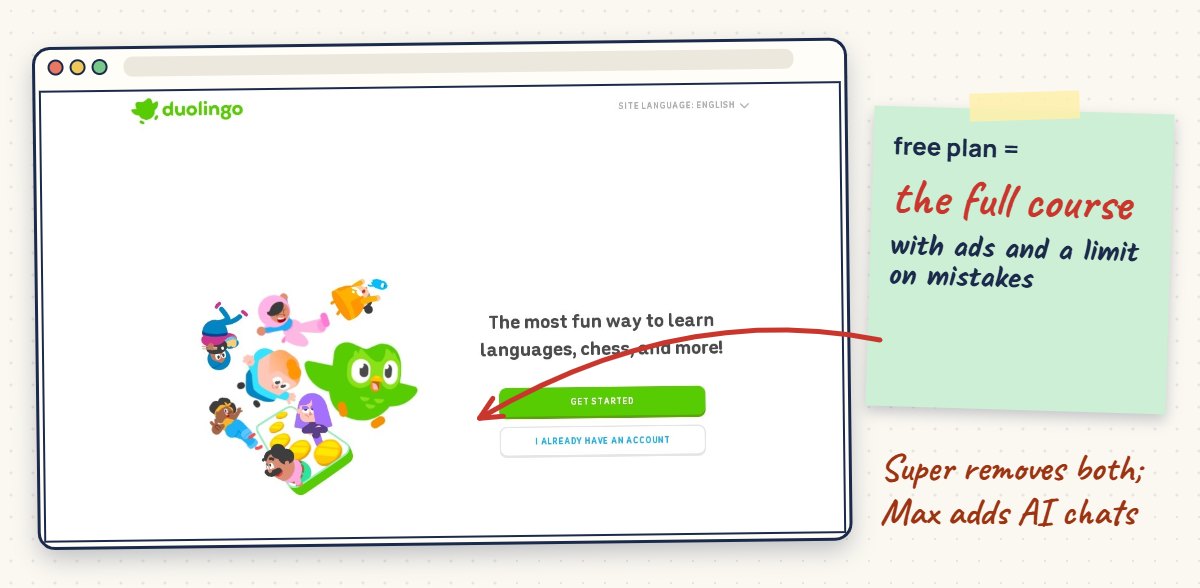
Duolingo turns practice into a game: short rounds, points, a daily streak and weekly leagues. You can finish a whole course without paying. The free plan shows ads and limits how many mistakes you can make before you need to wait or practise to earn more.
Super Duolingo removes the ads and the mistake limit and adds a review of your past errors. Max goes further with AI features: Video Call, a spoken chat with a character, and Roleplay, written conversations about real situations with feedback at the end. Duolingo says these features are available only for certain courses, so check your language before upgrading.
02 Babbel Structured lessons
Babbel feels more like a pocket language course. Lessons are built around short dialogues you might actually need (ordering, asking for directions, small talk), and grammar is explained in a sentence or two when it comes up. Speech recognition checks your pronunciation and review sessions bring back words you are about to forget.
You pay for the whole catalogue: every plan unlocks all 14 languages. In October 2026 the prices page showed $107.40 for 12 months and $299.99 for Lifetime, with a promo code running on top. The page also says the 12-month price “saves 41%” against paying month by month.
What the research says
Both companies publish studies, and both are worth reading with one question in mind: who paid for it, and what was measured?
- Duolingo’s own research team reports that learners who finished five sections of its French or Spanish course (about half of the B1 level) knew as much reading and listening as university students after five semesters. That is a company result, measured on reading and listening. Duolingo research summary.
- A Michigan State University study of Babbel asked 83 students to use the app for 10 minutes a day for 12 weeks. 54 finished, very few actually reached 10 minutes a day, yet almost 60% improved their speaking on an oral test. MSU Today.
- The same researcher’s small Duolingo test (nine people, Turkish, one semester) found that everyone learned something but nobody could use the language “very communicatively”. His advice for both apps: they are good for vocabulary and phrases, best for beginners, and work better with real conversation on the side.
Apps are a strong start for words and phrases. Speaking still needs a person on the other side.
Which one fits you? 30-second check
Pick the answers closest to you. Nothing is saved or sent.
A 2-week plan to decide
You do not need to guess. Give each app one honest week on the language you actually need:
- Week 1, Duolingo free: 10 minutes a day. On day 7, write down five sentences you can say without the app.
- Week 2, Babbel: take the free first lesson of your course (more if you sign up for its shortest plan). Same rule: write five sentences you can say from memory.
- Compare the two lists, not the number of days you opened the app. Pay only for the one that gave you the better sentences, and choose the shortest plan you are sure to finish.
Questions
Is Duolingo really free?
Yes. You can complete the course on the free plan. You will see ads and there is a limit on mistakes; Super removes both. Duolingo offers a one-week free trial of Super, charged at the end unless you cancel at least 24 hours before.
Is Babbel worth paying for?
It can be, if you want structured lessons with explanations and you will use it for the months you pay for. Run your own numbers in the cost-per-hour check above before choosing a long plan or Lifetime.
Can I become fluent with an app alone?
The research on both apps points the same way: they help with vocabulary, phrases and early grammar, mostly for beginners. Fluent conversation needs regular practice with real people.
Which is better for kids and teens?
Check each app’s age rules and parental settings first. For school learners, the best app is the one that matches the class vocabulary; ask the teacher which units are coming up.
Screenshots were saved in October 2026; interfaces and plans may change. Marketing claims visible in screenshots belong to the providers. Duolingo and Babbel are trademarks of their owners; Worksheet365 is not affiliated with either. Our editorial approach · Affiliate disclosure